
Applying Software Engineering for Robust Early Fault Detection in Industrial Systems Using Heterogeneous Ensemble Learning Models
Article Sidebar
Main Article Content
Abstract
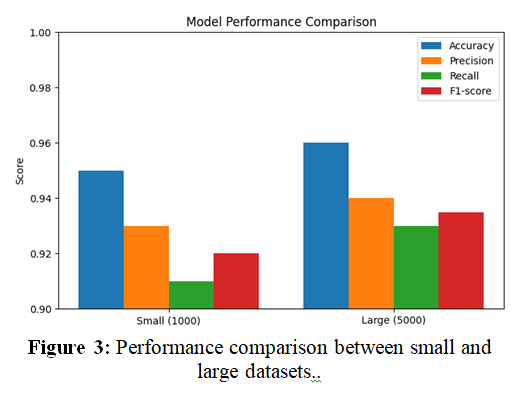
Software engineering plays a critical role in developing robust and scalable systems to monitor industrial systems to predictive maintenance. Industrial systems should have early fault detection and prevent equipment failures and downtime. Single classifiers do not however work well in identifying subtle and rare defects especially in imbalance data set. In this paper, I am proposing a heterogeneous ensemble learning model consisting of Random Forest, Gradient Boosting and Support Vector Machine (SVM) with a stacking method in order to enhance the detection accuracy. Data pre-processing methods were used to improve model performance such as feature scaling and class balancing. The experimental results demonstrate that the proposed ensemble had the accuracy of 0.95, precision of 0.93, recall of 0.91, and F1-score equal to 0.92 with the original dataset (1000 samples). As the number of samples grew to 5000, the accuracy, precision, recall and F1-score improved to 0.96, 0.94 and 0.93 respectively. This paper presents a heterogeneous stacking ensemble structure that is scalable, which incorporates multiple classifiers in a modular software design, and is capable of providing robust early fault detection during small and large data sets. The analysis of the importance of features showed that Temperature and Vibration are the most important indicators of early faults. The suggested solution is very robust and reliable in fault detection, it has low false alarms and it offers a good predictive maintenance solution to industrial and IoT enabled systems.
Article Details
Section

This work is licensed under a Creative Commons Attribution-NonCommercial-ShareAlike 4.0 International License.
Licensed under a CC-BY license: https://creativecommons.org/licenses/by-nc-sa/4.0/
How to Cite


References
Y. Yang and H. Wang, “Random forest-based machine failure prediction: A performance comparison,” Applied Sciences, vol. 15, no. 16, p. 8841, 2025, doi: 10.3390/app15168841.
H. Özcan, “Interpretable ensemble remaining useful life prediction for aircraft engines,” Scientific Reports, vol. 15, p. 39795, 2025, doi: 10.1038/s41598-025-23473-2.
N. A. Mohammed et al., “Performance analysis of machine learning algorithms for predictive maintenance,” Al-Khwarizmi Engineering Journal, vol. 20, no. 2, pp. 26–38, 2024, doi: 10.22153/kej.2024.11.003.
R. S. Kumar et al., “Hybrid machine learning framework for predictive maintenance in lithium-ion batteries,” Scientific Reports, vol. 15, p. 6243, 2025, doi: 10.1038/s41598-025-90810-w.
S. Djaballah et al., “A hybrid LSTM–random forest model for bearing fault detection,” Scientific Reports, vol. 14, p. 25174, 2024, doi: 10.1038/s41598-024-75174-x.
K. Ratsheola et al., “Hybrid AI model using autoencoders and random forest for fault diagnosis,” Engineering, vol. 6, no. 10, p. 254, 2025, doi: 10.3390/eng6100254.
A. Ali et al., “Comparative study of ensemble methods for predictive maintenance of hydraulic systems,” Results in Engineering, vol. 21, p. 102900, 2024, doi: 10.1016/j.rineng.2024.102900.
L. Benali et al., “Fault detection and diagnosis of PV systems using random forest,” Energy Conversion and Management, vol. 301, p. 118076, 2024, doi: 10.1016/j.enconman.2024.118076.
Agriandita et al., “Time-aware predictive maintenance using ensemble learning,” Journal of Petroleum Exploration and Production Technology, 2025, doi: 10.1007/s13202-025-02070-z.
X. Li et al., “Fault detection using tree-based ensemble learning,” Journal of Building Engineering, vol. 51, p. 104243, 2022, doi: 10.1016/j.jobe.2022.104243.
O. Sagi and L. Rokach, “Ensemble learning: A survey,” Wiley Interdisciplinary Reviews: Data Mining and Knowledge Discovery, vol. 8, no. 4, p. e1249, 2018, doi: 10.1002/widm.1249.
Z. Zhang, Y. Wang, and X. Li, “Fault detection using XGBoost in wind turbines,” Renewable Energy, vol. 172, pp. 119–130, 2021, doi: 10.1016/j.renene.2021.03.090.
C. Luo et al., “Research status and prospects of ensemble learning,” 2023, doi: 10.3389/fphy.2023.1480749.
K. Luo et al., “Distributed ensemble learning for big data applications,” 2024, doi: 10.11959/j.issn.2096-0271.2024002.
U. Ali et al., “Ensemble deep learning for fault diagnosis in industrial systems,” arXiv preprint, 2024, doi: