
A Comprehensive Review of 3D-Printed Shape Memory Polymers: Influence of Infill Design, Printing Parameters, and Applications
Article Sidebar
Main Article Content
Abstract
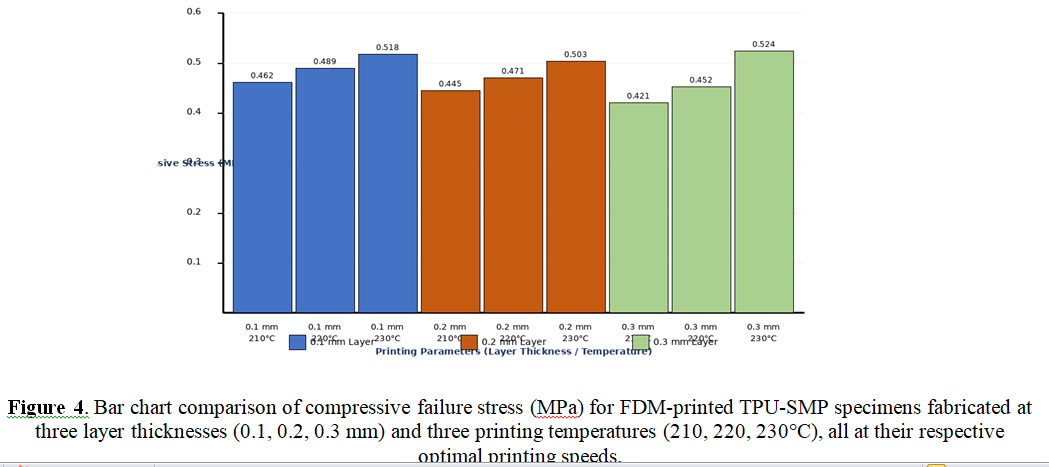
Smart materials with shape memory, known as shape memory polymers (SMPs), are able to return to a permanent shape after being deformed, when an external stimulus, such as heat, is applied. Fused deposition modeling (FDM/FFF) is now the primary additive manufacturing process to produce SMP-based complex architectural structures such as those needed for biomedical applications. While a critical and largely unexplored processing parameter for governing porosity, mechanical stiffness, energy absorption, shape fixity ratio (Rf) and shape recovery ratio (Rr), the infill design (pattern geometry/porosity/scaffold design) critically affects all of these factors. This critical review provides an overview of 198 references on: (1) fundamentals and classification of SMPs; (2) FDM processing parameters and its effect on microstructure and thermal stability; (3) quantitative relationships between infill design and mechanical/ shape memory properties; (4) TGA/DSC-based thermal characterization; (5) biomedical and 4D printing applications and (6) challenges and future prospects. Our conclusions show that the highest compressive strength is achieved at 0.1 mm layer thickness, 230°C printing temperature and 20 mm/s printing speed, while 0.2 mm/220°C/30 mm/s yields the best combination of mechanical properties (modulus and strength), energy absorption and cyclic shape memory. With respect to the scaffold design, OK shows the highest Rf (97.92%) while the WV shows the highest Rr (98.11%). Gyroid and honeycomb infill patterns are deemed the best for biomedical applications for their continuous porosity and isotropy.
Article Details
Section

This work is licensed under a Creative Commons Attribution-NonCommercial-ShareAlike 4.0 International License.
Licensed under a CC-BY license: https://creativecommons.org/licenses/by-nc-sa/4.0/
How to Cite


References
[1] Villacres, J., D. Nobes, and C. Ayranci, Additive manufacturing of shape memory polymers: effects of print orientation and infill percentage on shape memory recovery properties. Rapid Prototyping Journal, 2020. 26(9): p. 1593-1602.
[2] Valvez, S., et al., Fused filament fabrication-4D-printed shape memory polymers: a review. Polymers, 2021. 13(5): p. 701.
[3] Ehrmann, G. and A. Ehrmann, 3D printing of shape memory polymers. Journal of Applied Polymer Science, 2021. 138(34): p. 50847.
[4] Xia, Y., et al., A review of shape memory polymers and composites: mechanisms, materials, and applications. Advanced materials, 2021. 33(6): p. 2000713.
[5] Behl, M. and A. Lendlein, Shape-memory polymers. Materials today, 2007. 10(4): p. 20-28.
[6] Liu, C., H. Qin, and P. Mather, Review of progress in shape-memory polymers. Journal of materials chemistry, 2007. 17(16): p. 1543-1558.
[7] Zende, R., V. Ghase, and V. Jamdar, A review on shape memory polymers. Polymer-Plastics Technology and Materials, 2023. 62(4): p. 467-485.
[8] Hu, J., Shape Memory Polymers: Fundamentals, Advances and Applications. 2014: Smithers Rapa Technology Ltd.
[9] Khan, M.I., M. Zagho, and R. Shakoor, A brief overview of shape memory effect in thermoplastic polymers. Smart Polymer Nanocomposites; Springer, 2017: p. 281-301.
[10] Ni, C., et al., Shape memory polymer with programmable recovery onset. Nature, 2023. 622(7984): p. 748-753.
[11] Luo, L., et al., Recent Advances in Shape Memory Polymers: Multifunctional Materials, Multiscale Structures, and Applications. Advanced Functional Materials, 2024. 34(14): p. 2312036.
[12] Mazurek-Budzynska, M., et al., Shape-memory polymers. Functional Polymers, 2019: p. 605-663.
[13] Dayyoub, T., et al., Shape memory polymers as smart materials: a review. Polymers, 2022. 14(17): p. 3511.
[14] Li, F., Y. Liu, and J. Leng, Progress of shape memory polymers and their composites in aerospace applications. Smart Materials and Structures, 2019. 28(10): p. 103003.
[15] Zare, M., et al., Thermally-induced two-way shape memory polymers: Mechanisms, structures, and applications. Chemical Engineering Journal, 2019. 374: p. 706-720.
[16] Subash, A. and B. Kandasubramanian, 4D printing of shape memory polymers. European Polymer Journal, 2020. 134: p. 109771.
[17] Alshebly, Y.S., et al., Review on recent advances in 4D printing of shape memory polymers. European Polymer Journal, 2021. 159: p. 110708.
[18] Parameswaranpillai, J., et al., Shape Memory Polymers, Blends and Composites. 2019: Springer Singapore.
[19] Hornat, C.C. and M.W. Urban, Shape memory effects in self-healing polymers. Progress in Polymer Science, 2020. 102: p. 101208.
[20] Zhang, Y., et al., 4D Printing of a Digital Shape Memory Polymer with Tunable High Performance. ACS Applied Materials & Interfaces, 2019. 11(35): p. 32408-32413.
[21] Lei, M., et al., Recent progress in shape memory polymer composites: methods, properties, applications and prospects. Nanotechnology Reviews, 2019. 8(1): p. 327-351.
[22] Khalid, M.Y., et al., 4D printing of shape memory polymer composites: A review on fabrication techniques, applications, and future perspectives. Journal of Manufacturing Processes, 2022. 81: p. 759-797.
[23] Zhang, J., et al., Advances in 4D printed shape memory polymers: from 3D printing, smart excitation, and response to applications. Advanced Materials Technologies, 2022. 7(9): p. 2101568.
[24] Razzaq, M.Y., et al., 4D printing of multicomponent shape-memory polymer formulations. Applied Sciences, 2022. 12(15): p. 7880.
[25] Garces, I.T. and C. Ayranci, Advances in additive manufacturing of shape memory polymer composites. Rapid Prototyping Journal, 2021. 27(2): p. 379-398.
[26] Costanza, G. and M.E. Tata, Shape memory alloys for aerospace, recent developments, and new applications: A short review. Materials, 2020. 13(8): p. 1856.
[27] Guo, Y., The applications of shape memory materials in modern car industry and future trends. 2023.
[28] Delaey, J., P. Dubruel, and S. Van Vlierberghe, Shape-memory polymers for biomedical applications. Advanced Functional Materials, 2020. 30(44): p. 1909047.
[29] Singh, S.K., R. Kant, and S. Bhattacharya, Shape Memory Polymers and Their Emerging Applications. Trends in Applications of Polymers and Polymer Composites, 2022.
[30] Jayalath, S., et al., Durability and long-term behaviour of shape memory polymers and composites for the space industry. Polymer Degradation and Stability, 2023. 211: p. 110297.
[31] Liu, L.-Y., et al., Thermo-responsive shape-memory polyurethane foams from renewable lignin resources. Industrial & Engineering Chemistry Research, 2021. 60(32): p. 11882-11892.
[32] Huang, W.M., Shape memory polymers, in Cold Hibernated Elastic Memory Structure. 2018, CRC Press. p. 27-49.
[33] Safranski, D.L., Introduction to shape-memory polymers. Shape-memory polymer device design, 2017: p. 1-22.
[34] Huang, W.M., B. Yang, and Y.Q. Fu, Polyurethane shape memory polymers. 2012: CRC press Boca Raton, FL.
[35] Fu, Y.Q., et al., Polyurethane shape-memory polymers for biomedical applications. Shape Memory Polymers for Biomedical Applications, 2015, Woodhead Publishing. p. 167-195.
[36] Zhao, W., et al., Shape memory polymers and their composites in biomedical applications. Materials Science and Engineering: C, 2019. 97: p. 864-883.
[37] Sabahi, N., et al., Thermoplastic polyurethane-based shape memory polymers with potential biomedical application. Polymer, 2023. 283: p. 126189.
[38] Chen, H.-M., L. Wang, and S.-B. Zhou, Recent Progress in Shape Memory Polymers for Biomedical Applications. Chinese Journal of Polymer Science, 2018. 36(8): p. 905-917.
[39] Ramezani, M. and M.B.B. Monroe, Biostable Segmented Thermoplastic Polyurethane Shape Memory Polymers for Smart Biomedical Applications. ACS Applied Polymer Materials, 2022. 4(3): p. 1956-1965.
[40] Ramezani, M., et al., Solvent-free synthesis of biostable segmented polyurethane shape memory polymers for biomedical applications. Journal of Materials Chemistry B, 2024. 12.
[41] Hearon, K., et al., The effect of free radical inhibitor on the sensitized radiation crosslinking of polyurethane shape memory polymers. Radiation Physics and Chemistry, 2013. 83: p. 111-121.
[42] Huang, W., et al., Thermo-moisture responsive polyurethane shape-memory polymer and composites: A review. J. Mater. Chem., 2010. 20.
[43] Garces, I.T., et al., Effect of Moisture on Shape Memory Polyurethane Polymers for Extrusion-Based Additive Manufacturing. Materials, 2019. 12(2): p. 244.
[44] Wu, L., et al., Stiffness memory nanohybrid scaffolds generated by indirect 3D printing for biologically responsive soft implants. Acta biomaterialia, 2018. 80: p. 188-202.
[45] Wang, Y.-J., U.-S. Jeng, and S.-h. Hsu, Biodegradable water-based polyurethane shape memory elastomers for bone tissue engineering. ACS Biomaterials Science & Engineering, 2018. 4(4): p. 1397-1406.
[46] Jaidev, L. and K. Chatterjee, Surface functionalization of 3D printed polymer scaffolds to augment stem cell response. Materials & Design, 2019. 161: p. 44-54.
[47] Wu, L., et al., Cellular responses to thermoresponsive stiffness memory elastomer nanohybrid scaffolds by 3D-TIPS. Acta Biomaterialia, 2019. 85: p. 157-171.
[48] Wang, J., et al., Facile fabrication of near-infrared light-responsive shape memory nanocomposite scaffolds with hierarchical porous structures. Journal of Applied Polymer Science, 2021. 138(37): p. 50938.
[49] Zhang, Y., et al., 3D-printed NIR-responsive shape memory polyurethane/magnesium scaffolds with tight-contact for robust bone regeneration. Bioactive materials, 2022. 16: p. 218-231.
[50] Shahbazi, M., et al., 4D printing of poly-Pickering high internal phase emulsions to assembly a thermo-responsive shape-memory hierarchical macroporous scaffold. Additive Manufacturing, 2024. 81: p. 103977.
[51] Zhang, Q., et al., Temperature-controlled reversible pore size change of electrospun fibrous shape-memory polymer actuator based meshes. Smart Materials and Structures, 2019. 28(5): p. 055037.
[52] Niiyama, E., et al., Shape-memory nanofiber meshes with programmable cell orientation. Fibers, 2019. 7(3): p. 20.
[53] Pfau, M.R., et al., Evaluation of a self-fitting, shape memory polymer scaffold in a rabbit calvarial defect model. Acta biomaterialia, 2021. 136: p. 233-242.
[54] Roberts, C.T., et al., Star-PCL shape memory polymer (SMP) scaffolds with tunable transition temperatures for enhanced utility. Journal of Materials Chemistry B, 2024. 12(15): p. 3694-3702.
[55] Zhukova, P., et al., Polymer Composite Materials Based on Polylactide with a Shape Memory Effect for Self-Fitting Bone Implants. Polymers, 2021. 13(14): p. 2367.
[56] Shaabani, A., et al., Self-healable conductive polyurethane with the body temperature-responsive shape memory for bone tissue engineering. Chemical Engineering Journal, 2021. 411: p. 128449.
[57] Yu, J., et al., The effect of hydroxyapatite nanoparticles on mechanical behavior and biological performance of porous shape memory polyurethane scaffolds. Journal of Biomedical Materials Research Part A, 2018. 106(1): p. 244-254.
[58] Wang, C., et al., Development of polyhydroxyalkanoate-based polyurethane with water-thermal response shape-memory behavior as new 3D elastomers scaffolds. Polymers, 2019. 11(6): p. 1030.
[59] Pfau, M.R., et al., PCL-based shape memory polymer semi-IPNs: the role of miscibility in tuning the degradation rate. Biomacromolecules, 2020. 21(6): p. 2493-2501.
[60] Huang, K., et al., Porous shape memory scaffold of dextran and hydroxyapatite for minimum invasive implantation for bone tissue engineering. Journal of Biomaterials Applications, 2021. 35(7): p. 823-837.
[61] Mi, S., et al., Shape memory PLLA-TMC/CSH-dPA microsphere scaffolds with mechanical and bioactive enhancement for bone tissue engineering. Colloids and Surfaces A, 2021. 622: p. 126594.
[62] Arabiyat, A.S., et al., Intrinsic osteoinductivity of PCL-DA/PLLA semi-IPN shape memory polymer scaffolds. Journal of Biomedical Materials Research Part A, 2021. 109(11): p. 2334-2345.
[63] Luo, K., et al., Enhanced biomineralization of shape memory composite scaffolds from citrate functionalized amorphous calcium phosphate. Journal of Materials Chemistry B, 2021. 9(44): p. 9191-9203.
[64] Zhang, W., et al., An anti-bacterial porous shape memory self-adaptive stiffened polymer for alveolar bone regeneration. Bioactive Materials, 2023. 21: p. 450-463.
[65] Mao, Z., et al., Mechanically robust and personalized silk fibroin-magnesium composite scaffolds with water-responsive shape-memory for irregular bone regeneration. Nature Communications, 2024. 15(1): p. 4160.
[66] Ameen, A.A., A.M. Takhakh, and A. Abdal-hay, An Overview of the Latest Research on the Impact of 3D Printing Parameters on Shape Memory Polymers. European Polymer Journal, 2023: p. 112145.
[67] Peng, B., et al., Fused Filament Fabrication 4D Printing of a Highly Extensible, Self-Healing, Shape Memory Elastomer. ACS Applied Materials & Interfaces, 2021. 13(11): p. 12777-12788.
[68] Hendrikson, W.J., et al., Towards 4D printed scaffolds for tissue engineering: exploiting 3D shape memory polymers to deliver time-controlled stimulus. Biofabrication, 2017. 9(3): p. 031001.
[69] Pieri, K., et al., Printing Parameters of Fused Filament Fabrication Affect Key Properties of Four-Dimensional Printed Shape-Memory Polymers. 3D Printing and Additive Manufacturing, 2023. 10(2): p. 279-288.
[70] Wu, W., et al., Influence of Layer Thickness, Raster Angle, Deformation Temperature and Recovery Temperature on the Shape-Memory Effect of 3D-Printed Polylactic Acid Samples. Materials, 2017. 10(8): p. 970.
[71] Garcia Rosales, C.A., et al., Characterization of shape memory polymer parts fabricated using material extrusion 3D printing technique. Rapid Prototyping Journal, 2019. 25(2): p. 322-331.
[72] Liu, H., H. He, and B. Huang, Favorable thermoresponsive shape memory effects of 3D printed PLA/PCL blends fabricated by fused deposition modeling. Macromolecular Materials and Engineering, 2020. 305(11): p. 2000295.
[73] Choi, J., U. Waheed, and C. Myant, Investigating the impact of infill patterns on shape memory effect in material extrusion. Materials Research Express, 2024. 11.
[74] Choi, J., Investigating the role of infill structures on the shape memory effect of shape memory polymers in additive manufacturing. 2021, Imperial College London.
[75] Mehrpouya, M., et al., Investigation on the Functionality of Thermoresponsive Origami Structures. Advanced Engineering Materials, 2020. 22(8): p. 2000296.
[76] Rajkumar, A.R. and K. Shanmugam, Additive manufacturing-enabled shape transformations via FFF 4D printing. Journal of Materials Research, 2018. 33(24): p. 4362-4376.
[77] Sharma, R., R. Singh, and A. Batish, On mechanical and surface properties of electro-active polymer matrix-based 3D printed functionally graded prototypes. Journal of Thermoplastic Composite Materials, 2022. 35(5): p. 615-630.
[78] Chalgham, A., A. Ehrmann, and I. Wickenkamp, Mechanical properties of FDM printed PLA parts before and after thermal treatment. Polymers, 2021. 13(8): p. 1239.
[79] Zeng, C., et al., 4D printed electro-induced continuous carbon fiber reinforced shape memory polymer composites with excellent bending resistance. Composites Part B: Engineering, 2020. 194: p. 108034.
[80] Maina, F., et al., 4D Printing and Characterization of Shape Memory Polymer (SMP) Based Smart Gripper. European Journal of Engineering Research and Science, 2020. 5: p. 1204-1211.
[81] Pieri, K., 4D Printing Shape Memory Polymers for Biomedical Applications. 2020, Syracuse University.
[82] Ramos, N., C. Mittermeier, and J. Kiendl, Experimental and numerical investigations on heat transfer in fused filament fabrication 3D-printed specimens. International Journal of Advanced Manufacturing Technology, 2022. 118(5): p. 1367-1381.
[83] Singh, S. and R. Singh, Mechanical characterization and comparison of additive manufactured ABS, Polyflex and ABS/Polyflex blended functional prototypes. Rapid Prototyping Journal, 2020. 26(2): p. 225-237.
[84] Pandey, A., et al., 3D printed biodegradable functional temperature-stimuli shape memory polymer for customized scaffoldings. Journal of the Mechanical Behavior of Biomedical Materials, 2020. 108: p. 103781.
[85] Zhao, Z., et al., Three-Dimensional Printed Shape Memory Objects Based on an Olefin Ionomer of Zinc-Neutralized Poly(ethylene-co-methacrylic acid). ACS Applied Materials & Interfaces, 2017. 9(32): p. 27239-27249.
[86] Zhang, F., et al., Magnetic programming of 4D printed shape memory composite structures. Composites Part A, 2019. 125: p. 105571.
[87] Le Fer, G. and M.L. Becker, 4D Printing of Resorbable Complex Shape-Memory Poly(propylene fumarate) Star Scaffolds. ACS Applied Materials & Interfaces, 2020. 12(20): p. 22444-22452.
[88] Sauter, T., et al., Fiber diameter as design parameter for tailoring the macroscopic shape-memory performance of electrospun meshes. Materials & Design, 2021. 202: p. 109546.
[89] Zhao, W., et al., Porous bone tissue scaffold concept based on shape memory PLA/Fe3O4. Composites Science and Technology, 2021. 203: p. 108563.
[90] Sadeghi, F., et al., TPMS metamaterial structures based on shape memory polymers: Mechanical, thermal and thermomechanical assessment. Journal of Materials Research and Technology, 2023. 23: p. 3726-3743.
[91] Shuai, C., et al., Layered co-continuous structure in bone scaffold fabricated by laser additive manufacturing for enhancing electro-responsive shape memory properties. Journal of Materials Research and Technology, 2024. 30: p. 61-69.
[92] Li, T., et al., The current status, prospects, and challenges of shape memory polymers application in bone tissue engineering. Polymers, 2023. 15(3): p. 556.
[93] Lee, J. and S.-K. Kang, Principles for Controlling the Shape Recovery and Degradation Behavior of Biodegradable Shape-Memory Polymers in Biomedical Applications. Micromachines, 2021. 12(7): p. 757.
[94] Huzum, B., et al., Biocompatibility assessment of biomaterials used in orthopedic devices: An overview (Review). Exp Ther Med, 2021. 22(5): p. 1315.
[95] Audouard, E., et al., Optimized protocol for subcutaneous implantation of encapsulated cells device and evaluation of biocompatibility. Frontiers in bioengineering and biotechnology, 2021. 9: p. 620967.
[96] Boccaccio, A., Design of materials for bone tissue scaffolds. 2021, MDPI. p. 5985.
[97] Velasco, M.A., C.A. Narvaez-Tovar, and D.A. Garzon-Alvarado, Design, Materials, and Mechanobiology of Biodegradable Scaffolds for Bone Tissue Engineering. BioMed Research International, 2015. 2015(1): p. 729076.
[98] Dixon, D.T. and C.T. Gomillion, Conductive scaffolds for bone tissue engineering: current state and future outlook. Journal of Functional Biomaterials, 2021. 13(1): p. 1.
[99] Peterson, G.I., A.V. Dobrynin, and M.L. Becker, Biodegradable Shape Memory Polymers in Medicine. Advanced Healthcare Materials, 2017. 6(21): p. 1700694.
[100] Pires, J.R.A., et al., Methodologies to Assess the Biodegradability of Bio-Based Polymers. Polymers, 2022. 14(7): p. 1359.
[101] Funabashi, M., F. Ninomiya, and M. Kunioka, Biodegradability Evaluation of Polymers by ISO 14855-2. International Journal of Molecular Sciences, 2009. 10(8): p. 3635-3654.
[102] Posa, F., et al., Bioengineering Bone Tissue with 3D Printed Scaffolds in the Presence of Oligostilbenes. Materials, 2020. 13(20): p. 4471.
[103] Zadpoor, A.A., Bone tissue regeneration: the role of scaffold geometry. Biomaterials science, 2015. 3(2): p. 231-245.
[104] Ishida, H., et al., In Vitro and In Vivo Evaluation of Starfish Bone-Derived beta-Tricalcium Phosphate as a Bone Substitute Material. Materials, 2019. 12(11): p. 1881.
[105] N. Musthafa, H.-S., J. Walker, and M. Domagala, Computational Modelling and Simulation of Scaffolds for Bone Tissue Engineering. Computation, 2024. 12(4): p. 74.
[106] Echeverria Molina, M.I., K.G. Malollari, and K. Komvopoulos, Design Challenges in Polymeric Scaffolds for Tissue Engineering. Front Bioeng Biotechnol, 2021. 9: p. 617141.
[107] Hearon, K., et al., Porous Shape-Memory Polymers. Polymer Reviews, 2013. 53(1): p. 41-75.
[108] Collins, M.N., et al., Scaffold Fabrication Technologies and Structure/Function Properties in Bone Tissue Engineering. Advanced Functional Materials, 2021. 31(21): p. 2010609.
[109] Liebschner, M. and M. Wettergreen, Optimization of bone scaffold engineering for load bearing applications. Topics in tissue engineering, 2003. 1.
[110] Prasad, A., State of art review on bioabsorbable polymeric scaffolds for bone tissue engineering. Materials Today: Proceedings, 2021. 44: p. 1391-1400.
[111] Ramaraju, H., et al., Designing Biodegradable Shape Memory Polymers for Tissue Repair. Advanced Functional Materials, 2020. 30(44): p. 2002014.
[112] Javid-Naderi, M.J., et al., Synthetic polymers as bone engineering scaffold. Polymers for Advanced Technologies, 2023. 34(7): p. 2083-2096.
[113] Liu, T., et al., 4D printed anisotropic structures with tailored mechanical behaviors and shape memory effects. Composites Science and Technology, 2020. 186: p. 107935.
[114] Zeng, C., et al., Compression behavior and energy absorption of 3D printed continuous fiber reinforced composite honeycomb structures with shape memory effects. Additive Manufacturing, 2021. 38: p. 101842.
[115] Shigley, J., Shigley's Mechanical Engineering Design. 2006: McGraw-Hill Primis.
[116] Menczel, J.D., R.B. Prime, and P.K. Gallagher, Introduction, in Thermal Analysis of Polymers. 2009. p. 1-6.
[117] Menczel, J.D., et al., Differential Scanning Calorimetry (DSC), in Thermal Analysis of Polymers. 2009. p. 7-239.
[118] Prime, R.B., et al., Thermogravimetric Analysis (TGA), in Thermal Analysis of Polymers. 2009. p. 241-317.
[119] Chen, L., et al., An investigation on thermo-mechanical performance of graphene-oxide-reinforced shape memory polymer. Nanotechnology Reviews, 2022. 11(1): p. 2349-2365.
[120] Slavkovic, V., et al., Thermo-Mechanical Characterization of 4D-Printed Biodegradable Shape-Memory Scaffolds. Materials, 2023. 16(14): p. 5186.
[121] Koualiarella, A., et al., Tuning of shape memory polymer properties by controlling 3D printing strategy. CIRP Annals, 2020. 69(1): p. 213-216.
[122] Pfau, M.R., et al., Shape memory polymer (SMP) scaffolds with improved self-fitting properties. J Mater Chem B, 2021. 9(18): p. 3826-3837.
[123] Beltran, F.O., C.J. Houk, and M.A. Grunlan, Bioactive Siloxane-Containing Shape-Memory Polymer (SMP) Scaffolds with Tunable Degradation Rates. ACS Biomaterials Science & Engineering, 2021. 7(4): p. 1631-1639.
[124] Staszczak, M., et al., Characterization of Polyurethane Shape Memory Polymer and Determination of Shape Fixity and Shape Recovery. Polymers, 2022. 14(21): p. 4775.
[125] Ehrmann, G. and A. Ehrmann, Investigation of the Shape-Memory Properties of 3D Printed PLA Structures with Different Infills. Polymers, 2021. 13(1): p. 164.
[126] Verma, S. and V. Kumar Verma, Shape memory polymers for additive manufacturing: An overview. Materials Today: Proceedings, 2022. 57: p. 2077-2081.
[127] Valerga, A.P., et al., Influence of PLA Filament Conditions on Characteristics of FDM Parts. Materials, 2018. 11(8): p. 1322.
[128] Bodaghi, M., et al., 4D Printing Self-Morphing Structures. Materials, 2019. 12(8): p. 1353.
[129] Guastaldi, F.P. and B. Mahadik, Bone tissue engineering: bench to bedside using 3d printing. 2022.
[130] Copus, J., et al., Additive Manufacturing Technologies for Bone Tissue Engineering. Bone Tissue Engineering, 2022, Springer. p. 71-91.
[131] Guastaldi, F.P.S., et al., 3D printing for oral and maxillofacial regeneration. Bone Tissue Engineering, 2022, Springer. p. 93-119.
[132] Akhoundi, B., A.H. Behravesh, and A. Bagheri Saed, Improving mechanical properties of continuous fiber-reinforced thermoplastic composites produced by FDM 3D printer. Journal of Reinforced Plastics and Composites, 2019. 38(3): p. 99-116.
[133] Kim, C.G., et al., Fabrication of biocompatible polycaprolactone-hydroxyapatite composite filaments for the FDM 3D printing of bone scaffolds. Applied Sciences, 2021. 11(14): p. 6351.
[134] Beatrice, C.A.G., et al., Engineering printable composites of poly(epsilon-polycaprolactone)/beta-tricalcium phosphate for biomedical applications. Polymer Composites, 2021. 42(3): p. 1198-1213.
[135] Ansari, M.A.A., et al., Engineering biomaterials to 3D-print scaffolds for bone regeneration. Biomaterials Science, 2022. 10(11): p. 2789-2816.
[136] Choe, R., et al., 3D Bioprinting and Nanotechnology for Bone Tissue Engineering. Bone Tissue Engineering, 2022, Springer International Publishing. p. 193-223.
[137] Obuseh, F., C. Jones, and E.M. Brey, Strategies for 3D Printing of Vascularized Bone. Bone Tissue Engineering, 2022, Springer International Publishing. p. 249-265.
[138] Liu, H., H. He, and B. Huang, Favorable Thermoresponsive Shape Memory Effects of 3D Printed PLA/PCL Blends Fabricated by Fused Deposition Modeling. Macromolecular Materials and Engineering, 2020. 305(11): p. 2000295.
[139] Nugroho, W.T., et al., Smart polyurethane composites for 3D or 4D printing: General-purpose use, sustainability and shape memory effect. Composites Part B: Engineering, 2021. 223: p. 109104.
[140] Buj-Corral, I., A. Bagheri, and M. Sivatte-Adroer, Effect of Printing Parameters on Dimensional Error, Surface Roughness and Porosity of FFF Printed Parts with Grid Structure. Polymers, 2021. 13(8): p. 1213.
[141] Peng, W., et al., Effects of FDM-3D printing parameters on mechanical properties and microstructure of CF/PEEK and GF/PEEK. Chinese Journal of Aeronautics, 2021. 34(9): p. 236-246.
[142] Ambati, S.S. and R. Ambatipudi, Effect of infill density and infill pattern on the mechanical properties of 3D printed PLA parts. Materials Today: Proceedings, 2022. 64: p. 804-807.
[143] Dave, H.K., et al., Effect of infill pattern and infill density at varying part orientation on tensile properties of fused deposition modeling-printed PLA part. Proc. IMechE Part C, 2021. 235(10): p. 1811-1827.
[144] Contreras Raggio, J.I., et al., Height-to-Diameter Ratio and Porosity Strongly Influence Bulk Compressive Mechanical Properties of 3D-Printed Polymer Scaffolds. Polymers, 2022. 14(22): p. 5017.
[145] Koske, D. and A. Ehrmann, Advanced Infill Designs for 3D Printed Shape-Memory Components. Micromachines, 2021. 12: p. 1225.
[146] Kafle, A., et al., 3D/4D printing of polymers: fused deposition modelling (FDM), selective laser sintering (SLS), and stereolithography (SLA). Polymers, 2021. 13: p. 3101.
[147] Bruere, V., et al., The influence of printing parameters on the mechanical properties of 3D printed TPU-based elastomers. Progress in Additive Manufacturing, 2023. 8(4): p. 693-701.
[148] Brancewicz-Steinmetz, E., J. Sawicki, and P. Byczkowska, The influence of 3D printing parameters on adhesion between PLA and TPU. Materials, 2021. 14(21): p. 6464.
[149] Dery, B. and L. Zaixiang, Scanning Electron Microscopy (SEM) as an Effective Tool for Determining the Morphology and Mechanism of Action of Functional Ingredients. Food Reviews International, 2023. 39(4): p. 2007-2026.
[150] ASTM E473-22d Standard Terminology Relating to Thermal Analysis and Rheology. 2023, ASTM International.
[151] ASTM E1641-18 Standard Test Method for Decomposition Kinetics by Thermogravimetry. 2023, ASTM International.
[152] ASTM D695-23 Standard Test Method for Compressive Properties of Rigid Plastics. 2023, ASTM International.
[153] Pfau, M.R. and M.A. Grunlan, Smart scaffolds: shape memory polymers (SMPs) in tissue engineering. Journal of Materials Chemistry B, 2021. 9(21): p. 4287-4297.
[154] Tezerjani, S.M.D., M.S. Yazdi, and M.H. Hosseinzadeh, The effect of 3D printing parameters on the shape memory properties of 4D printed PLA circular disks. Materials Today Communications, 2022. 33: p. 104262.
[155] Ermolai, V., Characterisation of the shape memory effect of PET polymer by FFF 3D printing. 2023. 93-100.
[156] Cersoli, T., et al., 3D Printed Shape Memory Polymers Produced via Direct Pellet Extrusion. Micromachines, 2021. 12(1): p. 87.
[157] Barletta, M., A. Gisario, and M. Mehrpouya, 4D printing of shape memory PLA components: Investigating the role of the operational parameters in FDM. Journal of Manufacturing Processes, 2021. 61: p. 473-480.
[158] Ritzen, L., V. Montano, and S.J. Garcia, 3D printing of a self-healing thermoplastic polyurethane through FDM. Polymers, 2021. 13(2): p. 305.
[159] Atta, I., et al., Physiochemical and mechanical characterisation of orthodontic 3D printed aligner material made of shape memory polymers. Journal of the Mechanical Behavior of Biomedical Materials, 2024. 150: p. 106337.
[160] Akbar, I., et al., Investigation of thermo-mechanical shape memory signatures of 3D printed and Injection molded polymers. CIRP Journal of Manufacturing Science and Technology, 2023. 41: p. 277-291.
[161] Cunha, R.B.d., et al., Influence of crystallization on the shape memory effect of poly (lactic acid). Smart Material Structures, 2023. 32: p. 085016.
[162] Nie, D., et al., Effect of Crystallization on Shape Memory Effect of Poly(lactic Acid). Polymers, 2022. 14(8): p. 1569.
[163] Sichina, W., Characterization of polymers using TGA. 2000.
[164] Price, D.M., D.J. Hourston, and F. Dumont, Thermogravimetry of polymers. Encyclopedia of analytical chemistry, 2000: p. 8094-8105.
[165] Bajsic, E.G., V. Rek, and B.O. Pavic, The influence of talc content on the thermal and mechanical properties of TPU/PP blends. Journal of Elastomers & Plastics, 2013. 45(6): p. 501-522.
[166] Lu, H., et al., Quantitative separation of the influence of hydrogen bonding of ethanol/water mixture on the shape recovery behavior of polyurethane shape memory polymer. Smart Materials and Structures, 2014. 23: p. 125041.
[167] Le, D., et al., Optimizing 3D printing process parameters for the tensile strength of thermoplastic polyurethane plastic. Journal of Materials Engineering and Performance, 2023: p. 1-12.
[168] Vidakis, N., et al., Strain rate sensitivity of polycarbonate and thermoplastic polyurethane for various 3d printing temperatures and layer heights. Polymers, 2021. 13(16): p. 2752.
[169] Wang, P., B. Zou, and S. Ding, Modeling of surface roughness based on heat transfer considering diffusion among deposition filaments for FDM 3D printing heat-resistant resin. Applied Thermal Engineering, 2019. 161: p. 114064.
[170] Ursini, C. and L. Collini, FDM layering deposition effects on mechanical response of TPU lattice structures. Materials, 2021. 14(19): p. 5645.
[171] Sheoran, A.J. and H. Kumar, Fused Deposition modeling process parameters optimization and effect on mechanical properties and part quality: Review. Materials Today: Proceedings, 2020. 21: p. 1659-1672.
[172] Pivar, M., D. Gregor-Svetec, and D. Muck, Effect of printing process parameters on the shape transformation capability of 3D printed structures. Polymers, 2021. 14(1): p. 117.
[173] Wendt, C., et al., Processing and Quality Evaluation of Additive Manufacturing Monolayer Specimens. Advances in Materials Science and Engineering, 2016. 2016: p. 1-8.
[174] Chaidas, D., et al., The Impact of Temperature Changing on Surface Roughness of FFF process. 2016.
[175] Huang, B., et al., Study of processing parameters in fused deposition modeling based on mechanical properties of ABS filament. Polymer Engineering & Science, 2019. 59(1): p. 120-128.
[176] Gibson, L.J. and M.F. Ashby, Cellular Solids: Structure and Properties - Second Edition. 1997: Cambridge University Press.
[177] De Vries, D., Characterization of polymeric foams. Eindhoven University of Technology, 2009.
[178] Nace, S.E., et al., A comparative analysis of the compression characteristics of a thermoplastic polyurethane 3D printed in four infill patterns for comfort applications. Rapid Prototyping Journal, 2021. 27(11): p. 24-36.
[179] Pazhamannil, R.V., et al., Investigations into the effect of thermal annealing on fused filament fabrication process. Advances in Materials and Processing Technologies, 2022. 8(sup2): p. 710-723.
[180] Dave, H.K. and J.P. Davim, Fused deposition modeling based 3D printing. 2021: Springer.
[181] Farkas, A.Z., S.-V. Galatanu, and R. Nagib, The Influence of Printing Layer Thickness and Orientation on the Mechanical Properties of DLP 3D-Printed Dental Resin. Polymers, 2023. 15(5): p. 1113.
[182] Sehhat, M.H., A. Mahdianikhotbesara, and F. Yadegari, Impact of temperature and material variation on mechanical properties of parts fabricated with FDM. International Journal of Advanced Manufacturing Technology, 2022. 120(7): p. 4791-4801.
[183] Kechagias, J.D., N. Vidakis, and M. Petousis, Parameter effects and process modeling of FFF-TPU mechanical response. Materials and Manufacturing Processes, 2023. 38(3): p. 341-351.
[184] Hasdiansah, H., et al., FDM-3D printing parameter optimization using taguchi approach on surface roughness of thermoplastic polyurethane parts. International Journal on Interactive Design and Manufacturing, 2023. 17(6): p. 3011-3024.
[185] Zhang, C., et al., Compression Behavior of 3D Printed Polymer TPU Cubic Lattice Structure. Materials Research, 2022. 25.
[186] Iacob, M.C., et al., Compressive behavior of thermoplastic polyurethane with an active agent foaming for 3D-printed customized comfort insoles. Polymer Testing, 2024. 137: p. 108517.
[187] Ngeow, Y.W., et al., A comparative evaluation of compression moulded and fused deposition modelling 3D printed thermoplastic polyurethane. Journal of Rubber Research, 2024. 27(2): p. 193-200.
[188] Rahmatabadi, D., et al., 4D printing of porous PLA-TPU structures: effect of applied deformation, loading mode and infill pattern on the shape memory performance. Physica Scripta, 2024. 99(2): p. 025013.
[189] Gohar, S., et al., Mechanical performance of honeycomb sandwich structures built by FDM printing technique. Journal of Thermoplastic Composite Materials, 2023. 36(1): p. 182-200.
[190] Wang, K., et al., Effects of infill characteristics and strain rate on the deformation and failure properties of additively manufactured polyamide-based composite structures. Results in Physics, 2020. 18: p. 103346.
[191] Wang, Y., et al., 3D printing thermo-responsive shape memory polymer composite based on PCL/TPU blends. Journal of Polymer Research, 2022. 29(6): p. 243.
[192] Rahmatabadi, D., et al., 4D printing of PLA-TPU blends: effect of PLA concentration, loading mode, and programming temperature on the shape memory effect. Journal of Materials Science, 2023. 58(16): p. 7227-7243.
[193] Ren, T., et al., Research on the cyclic compression performance of polycarbonate-based thermoplastic polyurethane foams. Journal of CO2 Utilization, 2022. 65.
[194] Geng, T., et al., The Study on the Morphology and Compression Properties of Microcellular TPU/Nanoclay Tissue Scaffolds. Polymers, 2023. 15(17): p. 3647.
[195] Iacob, M.-C., D. Popescu, and B. Florin, Effect of Process Parameters on the Hardness of 3D-printed Thermoplastic Polyurethane that Includes Foaming Agent. Materiale Plastice, 2024. 60: p. 144-154.
[196] de la Rosa, S., et al., Design and characterization of 3D-printed TPU-based lattice structures for personalized therapeutic products. Rapid Prototyping Journal, 2024. 30(11): p. 72-86.
[197] Zhang, S., et al., 3D-Printed Polyurethane Tissue-Engineering Scaffold with Hierarchical Microcellular Foam Structure and Antibacterial Properties. Advanced Engineering Materials, 2022. 24(3): p. 2101134.
[198] Samal, B.B., et al., 4D printing: An experimental case study on processing of shape memory polymer by FDM/FFF for nature inspired structures, in Advances in Additive Manufacturing, 2023, Elsevier. p. 361-377.