
Enhanced Classification of UML Class Diagram Components Using Deep Learning for IT and Engineering Solutions
Article Sidebar
Main Article Content
Abstract
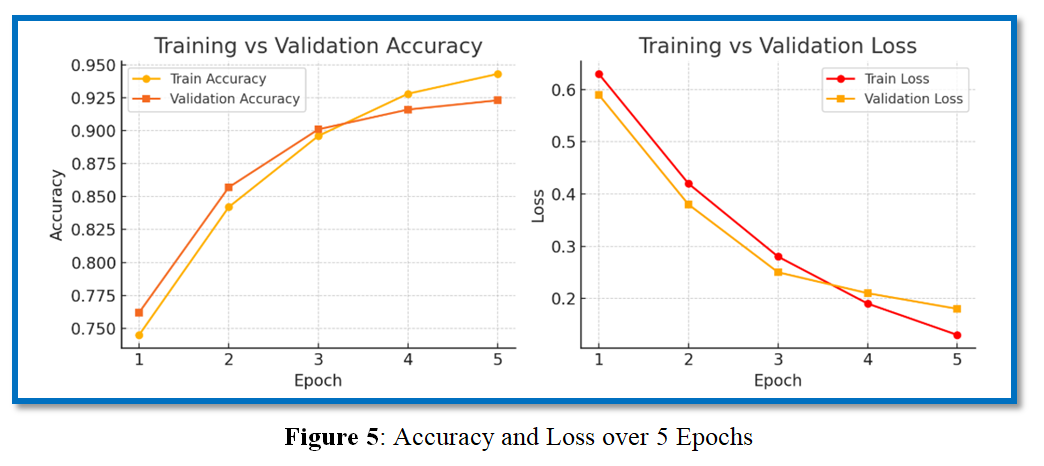
UML class diagrams are key to object-oriented software development, capturing structural descriptions of software systems. But manual interpretation and analysis of UML diagrams is time-consuming, prone to errors and not scalable, especially during software maintenance and reverse engineering. In this paper, a deep learning model is presented to automate recognition of UML class diagram components by using a Convolutional Neural Network (CNN). The proposed approach does not use text-based features of UML class components and instead uses only visual features to classify UML class components into four classes: Entity, Service, Controller, and Utility. A dataset of real UML class diagrams was labeled for supervised learning. Our model outperformed baseline methods, with a classification accuracy of 92.3% on the test set and generalised well to different diagram types. This paper makes the following contributions: (1) a lightweight CNN-based model for UML component classification, (2) a benchmark labeled dataset, and (3) comparison of visual-only learning with traditional techniques in UML component classification. This research advances the field of Software Engineering, especially Computer-Aided Software Engineering (CASE), by facilitating smart automation in software modeling and documentation tools. The paper presents a feasible and effective roadmap to intelligent software modeling tools and automated documentation systems.
Article Details
Section

This work is licensed under a Creative Commons Attribution-NonCommercial-ShareAlike 4.0 International License.
Licensed under a CC-BY license: https://creativecommons.org/licenses/by-nc-sa/4.0/
How to Cite


References
Ciccozzi, F., Malavolta, I., & Selic, B. (2019). Execution of UML models: a systematic review of research and practice. Software & Systems Modeling, 18(3), 2313-2360.
Rumpe, B. (2016). Modeling with UML (Vol. 98). Cham: Springer.
Ozkaya, M. (2019). Are the UML modelling tools powerful enough for practitioners? A literature review. IEt software, 13(5), 338-354.
Ciccozzi, F., Malavolta, I., & Selic, B. (2019). Execution of UML models: a systematic review of research and practice. Software & Systems Modeling, 18(3), 2313-2360.
Avyodri, R., Lukas, S., & Tjahyadi, H. (2022, September). Optical character recognition (ocr) for text recognition and its post-processing method: A literature review. In 2022 1st International Conference on Technology Innovation and Its Applications (ICTIIA) (pp. 1-6). IEEE.
Mohaideen Abdul Kadhar, K., & Anand, G. (2024). Optical character recognition. In Industrial Vision Systems with Raspberry Pi: Build and Design Vision Products Using Python and OpenCV (pp. 215-254). Berkeley, CA: Apress.
Li, P., Zhou, B., Wang, C., Hu, G., Yan, Y., Guo, R., & Xia, H. (2024). CNN-based pavement defects detection using grey and depth images. Automation in Construction, 158, 105192.
Nazir, Md Imran, Afsana Akter, Md Anwar Hussen Wadud, and Md Ashraf Uddin. "Utilizing customized CNN for brain tumor prediction with explainable AI." Heliyon 10, no. 20 (2024).
Chen, Y., & Wang, S. (2024, July). Research on software classification based on LSTM and CNN. In Third International Symposium on Computer Applications and Information Systems (ISCAIS 2024) (Vol. 13210, pp. 213-219). SPIE.
Silva, A. D., & Carvalho, T. C. M. B. (2021). UML diagram classification using CNN and transfer learning. Applied Sciences, 11(9), 4267. https://www.mdpi.com/2076-3417/11/9/4267
Azmi, A. M., & Mehmood, R. (2021). Deep learning approaches for identifying UML diagrams. International Journal of Software Engineering and Knowledge Engineering, 31(10), 1387–1406. https://doi.org/10.1142/S0218194021400179
Javed, H., & Malik, M. H. (2022). Automated extraction of UML class elements using CNN. In 2022 International Conference on Artificial Intelligence and Smart Systems (ICAIS) (pp. 56–61). IEEE. https://ieeexplore.ieee.org/abstract/document/9680314
Hussain, M. F., & Nawaz, S. (2023). Natural language processing techniques for UML class generation. Journal of Computer and Biomedical Informatics, 7(1). https://www.jcbi.org/index.php/Main/article/view/546
Reyes, J., & Olivas, J. A. (2024). Improving educational support with efficient UML diagram classification. In Artificial Intelligence in Education (Vol. 14763, pp. 79–94). Springer. https://link.springer.com/chapter/10.1007/978-3-031-75605-4_6
Zhang, Y., & Chen, B. (2024). Structural analysis of UML diagrams using graph convolutional networks. In Advances in Software Engineering and Data Mining (Vol. 14271, pp. 235–251). Springer. https://link.springer.com/chapter/10.1007/978-3-031-63031-6_16
Booch, G., Rumbaugh, J., & Jacobson, I. (2005). The Unified Modeling Language User Guide (2nd ed.). Addison-Wesley.
YM Mohialden, HA Abdulbaqi, NM Shati ,Developing collaboration tool for virtual team using UML models,Indonesian Journal of Electrical Engineering and Computer Science 22 (1), 38–44
Larman, C. (2004). Applying UML and Patterns: An Introduction to Object-Oriented Analysis and Design and Iterative Development (3rd ed.). Prentice Hall.
Xu, Z., Sun, F., & Zhang, W. (2024, June). Research on Activity Diagram Testing method based on UML Testing Profile. In 2024 6th International Conference on Electronic Engineering and Informatics (EEI) (pp. 434-439). IEEE.
Ferrari, A., Abualhaijal, S., & Arora, C. (2024, June). Model generation with LLMs: From requirements to UML sequence diagrams. In 2024 IEEE 32nd International Requirements Engineering Conference Workshops (REW) (pp. 291-300). IEEE.